
Septic tank treatment is more than pouring a product into a drain. It includes regular pumping, inspections, smart water use, and careful choices about what enters your plumbing.
If you’re noticing odors, slow drains, or pink slime, it’s easy to worry about a costly failure. Still, most healthy systems respond well to steady care. Septic tank treatment additives may support a working system, but they can’t remove settled sludge, repair a broken pipe, or bring back a failed drain field.
A few simple habits can protect your home, your health, and your budget.
Key Takeaways
- Pumping removes solids that can otherwise reach and damage the drain field.
- Most homes need service every 3 to 5 years, but household use matters.
- Additives can support bacteria, but they never replace pumping or repairs.
- Avoid grease, wipes, solvents, harsh drain cleaners, and excessive disinfectants.
- Backups, standing wastewater, strong odors, and alarms need prompt professional attention.
What Septic Tank Treatment Does for Your System
Your septic tank is an underground settling tank. Wastewater enters from the house, then separates into layers. Heavy solids fall to the bottom and form sludge. Fats, oils, and grease rise to the top and form scum.
The clearer liquid in the middle is called effluent. It moves through an outlet baffle and often an effluent filter before reaching the drain field. There, perforated pipes spread the liquid through soil, which finishes the treatment process.
That middle space matters. When sludge and scum take up too much room, solids can escape through the outlet. Once solids reach the drain field, they can clog pipes and soil. That is where a routine issue can turn into an expensive yard repair.
Pumping removes the tank’s liquid, sludge, and scum with a vacuum truck. Cleaning may include a pump-out, filter cleaning, and light rinsing. An inspection checks the sludge level, scum level, baffles, filter, lids, and signs of damage. Additives are separate from all of that.
Many homes need pumping about every 3 to 5 years. A smaller tank, a large household, heavy water use, or frequent garbage disposal use can shorten that to every 2 to 3 years. Use measured sludge and scum levels to plan service, not a bottle’s promises. Keep a record of your septic tank pumping schedule and each service report.
How Natural Bacteria and Enzymes Fit Into Septic Care
Anaerobic bacteria already live in a working septic tank. They break down part of the organic waste without oxygen. In most homes, those bacteria don’t need constant help.
Bacterial or enzyme products can be optional support after unusual disruption, such as heavy chemical use. They are not a substitute for pumping. Be careful with claims that a product can make sludge disappear or fix a backup overnight.
Heavy bleach use, solvent cleaners, and caustic drain openers can upset helpful microbes. They can also damage pipes or soil. Use strong products only when needed, and never treat them as normal septic care.
Settled sludge must be physically removed. No powder, tablet, or liquid can vacuum it out of the tank.
Which Septic Tank Treatment Options Are Safe and Useful?
A good septic tank treatment plan starts with the actual problem. If the tank is full, arrange pumping. If a sink has mild organic buildup, a septic-safe drain product may help. If the drain field is wet, the system needs inspection, not another bottle.
Here is what common options can and cannot do:
| Option | Realistic use | Main limit |
| Professional pump-out | Removes sludge and scum | Doesn’t repair damaged parts |
| Biological additive | May support normal bacteria | Doesn’t replace pumping |
| Oxygen-based drain product | May freshen minor drain buildup | Won’t clear a severe blockage |
| Septic-safe drain care | Helps with mild organic residue | Won’t fix a backup |
| Non-solvent kitchen degreaser | Helps reduce grease in pipes | Won’t remove tank sludge |
Choose low-toxicity products labeled for septic systems only when you have a clear reason to use them. Follow the label and local rules. A treatment product cannot clear a severely blocked line, repair a damaged baffle, or fix saturated drain field soil.
If a product sounds too easy, it usually is. Read more about septic treatment myths versus facts before spending money on a supposed quick fix.
What to Avoid Pouring Into a Septic System
Wipes belong in the trash, even when the package says “flushable.” Grease and cooking oil harden as they cool. Paint, solvents, medications, harsh drain openers, and large amounts of disinfectant can cause trouble inside the system.
Spread laundry across the week instead of running several loads in one day. Fix dripping faucets and running toilets quickly. Too much water can overload the tank and drain field.
Pink, salmon, or orange slime is usually a biofilm. It grows on damp surfaces and feeds on soap residue, oils, and stagnant water. It isn’t automatic proof that your tank has failed.
Clean visible slime with a brush or sponge, mild soap, and water. Don’t pour large amounts of bleach into drains to fight it.
How to Prevent Backups, Odors, and Drain Field Damage
Good septic care is mostly routine. Save pumping dates, sludge measurements, repairs, invoices, and photos in one folder. These records help you spot changes and plan the next visit.
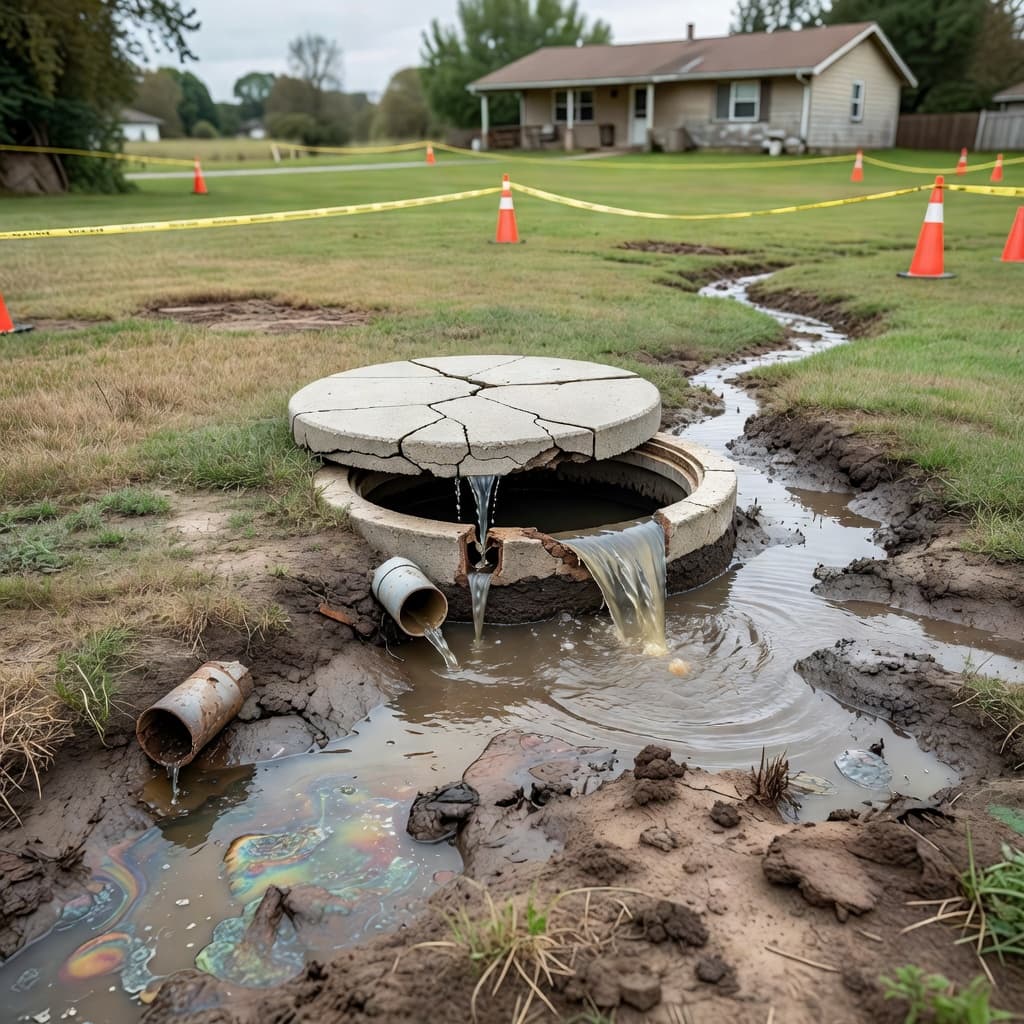
Watch for repeated slow drains, toilet gurgling, sewage odors, wet spots, unusually green grass over the field, standing water, or an alarm. An indoor backup needs immediate action. Stop using water, keep children and pets away from wastewater, and call a licensed septic contractor.
Don’t pour in chemical drain cleaners. Don’t keep flushing to force the problem through. Avoid power snaking from a toilet, since it can damage the bowl or wax ring. Never drive or park over the drain field.
Keep sheds, patios, hot tubs, heavy planters, and vehicles off that area. Grass and shallow-rooted plants are usually the safest choice. Keep deep-rooted trees about 20 to 30 feet away, and direct roof runoff, sump discharge, and irrigation away from the field.
A simple septic tank maintenance checklist can help you notice small changes before they become a messy surprise.
Why Heavy Rain Can Make Septic Problems Worse
Heavy rain saturates the soil around the drain field. Once the soil is waterlogged, it can’t accept and filter effluent as well. You may notice odors, puddles, soft ground, or bright green stripes over the trench lines.
Reduce showers, baths, laundry, and dishwasher use for 24 to 48 hours when the field is wet. Inspect the yard after rain, but don’t walk or drive over soft ground.
Recurring wet areas can point to a clogged filter, overloaded tank, broken pipe, or failing drain field. That needs professional testing and repair advice.
When Professional Septic Tank Treatment Is the Best Choice
A qualified contractor should locate and safely expose the lids, measure sludge and scum, pump the tank, and clean the effluent filter when present. They should also inspect inlet and outlet baffles, look for cracks or roots, and check for signs of drain field stress.
Inspections may cost about $100 to $400. Pumping often costs about $250 to $800, depending on tank size, access, depth, and your location. Repairs can cost hundreds of dollars, while major drain field work can reach tens of thousands.
Verify licensing and insurance before hiring anyone. Request a written estimate, ask for photos, and check whether local permits or inspections apply.
Never enter a septic tank or lean into an open tank. Methane, hydrogen sulfide, and low oxygen can make the space deadly without warning.
Questions to Ask Before You Hire a Septic Professional
Ask direct questions before work begins:
- What caused the problem, and what did you find in the tank?
- Are the effluent filter and baffles intact?
- Does the drain field show signs of saturation or stress?
- What work is included, and how will waste be disposed of?
- Will you provide measurements, photographs, and a written report?
- What materials and warranty are included with repairs?
Compare clear written estimates. The lowest advertised price may leave out filter service, digging, disposal, or needed inspection work.
Frequently Asked Questions
How often should you treat or pump a septic tank?
Pumping frequency depends on tank size, household size, water use, and measured sludge and scum levels. Many homes need service every 3 to 5 years, while some need it sooner.
Do septic additives replace pumping?
No. Additives may support bacteria in a working system, but they don’t remove accumulated solids. They also can’t fix a failed drain field or structural damage.
Can septic treatment fix a sewage backup?
A backup needs prompt inspection. Stop water use and call for service, because the cause could be a full tank, clogged filter, blocked pipe, damaged baffle, pump failure, or saturated drain field.
What should you do if your septic tank smells after rain?
Rain can saturate the drain field and trap gases near the ground. Odors can also come from a dry trap, clogged roof vent, loose lid, or system defect. Reduce water use and call for help if the odor repeats with slow drains or wet ground.
Is pink sludge a sign that your septic tank is failing?
Pink, salmon, or orange slime is often biofilm on damp household surfaces. It becomes more concerning when it appears with backups, strong sewage odors, slow drainage, or drain field problems.
A Steady Plan Costs Less Than a Crisis
Reliable septic tank treatment is a system of habits, not a single bottle. Timely pumping, inspections, moderate water use, careful waste disposal, and drain field protection all work together.
Routine service is usually far less expensive than cleaning sewage from your home or replacing a damaged drain field. Keep your records, pay attention to warning signs, and schedule professional help when normal maintenance is no longer enough.

Có thể bạn quan tâm:
Giá trị đọc và lưu giữ của Kinh Thánh – Lời Chúa Cho Mọi Người – góc nhìn 14
sách tìm hiểu Lời Chúa là một chủ đề có thể [...]
Septic Tank Treatment That Protects Your Home and Yard
Septic tank treatment is more than pouring a product into a [...]
Hướng dẫn ôn thi B1 tiếng Đức cho người cần lộ trình rõ ràng
Ôn thi B1 là giai đoạn then chốt đối với người [...]
Ôn thi B1 tiếng Đức hiệu quả từ nền tảng đến ngày thi
Ôn thi B1 là giai đoạn then chốt đối với người [...]
Eksplorasi Fantasy Sports Hiburan Online yang Mudah dan Mengasyikkan
[related_posts_by_tax title=""] Halo, Sobat Pecinta Judi Online!Jika kamu sedang mencari platform [...]
Môi Giới BĐS Dòng Tiền Vĩnh Bảo Ở Hải Phòng – 0782221111
🔥 ĐẤT NỀN NHÀ PHỐ XÃ VĨNH BẢO – TP HẢI [...]